
(Zero-Gravity Arms, Torque Reaction Arms, Ergonomic Lift Assist Systems & Industrial Manipulators Explained)
In many manufacturing environments, operators rely on handheld tools such as grinders, sanders, drills, and nutrunners. These tools often weigh 10–25 lb (4.5–11 kg) and may generate significant torque reaction during operation. Over a full shift, the physical strain of holding and controlling these tools can lead to fatigue, inconsistent work quality, and ergonomic injuries.
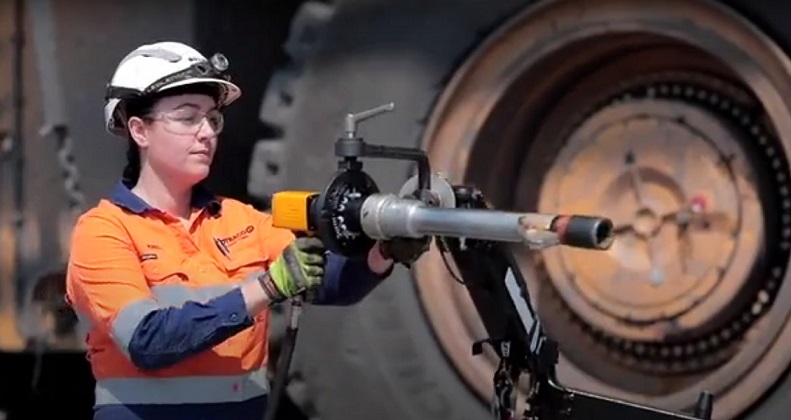
A tool balancer arm solves this problem by supporting the weight of the tool and stabilizing its movement so the operator only needs to guide it—not carry it.
Tool balancer arms are sometimes described as ergonomic lift assist systems because they reduce the physical effort required to handle industrial tools. In manufacturing settings, however, the more precise technical terms are tool balancer arm, zero-gravity arm, torque reaction arm, or articulating tool support arm, depending on the specific function and design.
These systems are widely used in operations such as grinding, sanding, polishing, drilling, fastening, and assembly, where improved ergonomics and precision are essential.
They are often discussed alongside industrial manipulators, which are designed to lift and position heavier objects rather than support handheld tools.
Quick Definition
A tool balancer arm is an articulated mechanical arm that supports the weight and torque of industrial tools, allowing operators to move them freely with minimal effort while maintaining precise control.
When properly balanced, the tool feels nearly weightless to the operator—often described as “zero gravity” tool handling.
Because they reduce physical strain, tool balancer arms are often categorized as ergonomic lift assist devices, a broader class of equipment designed to improve operator ergonomics and reduce lifting effort.
Common Names for Tool Balancer Arms
Manufacturers and operators often use different terminology when searching for these systems. In many cases, the names refer to related technologies used for ergonomic tool support or lifting assistance.
| Term | Typical Meaning |
|---|---|
| Tool Balancer Arm | Articulated arm that supports the weight of a tool |
| Zero-Gravity Arm | Counterbalanced arm that makes tools feel nearly weightless |
| Torque Reaction Arm | Arm designed to absorb rotational torque from tools |
| Articulating Tool Arm | Multi-joint arm allowing wide range of movement |
| Tool Support Arm | General term for systems that hold tools |
| Tool Balancing System | Equipment designed to counterbalance tool weight |
| Reaction Arm | Short term often used for torque control arms |
| Ergonomic Lift Assist | Broad category of equipment that reduces operator lifting effort |
| Industrial Manipulator | Device used to lift and position heavier objects |
| Pick-and-Place Arm | Manipulator used to move and position parts during assembly |
While terminology varies, the core goal is the same: reduce operator strain while improving control and productivity during manufacturing operations.
How a Tool Balancer Arm Works
A tool balancer arm works by combining articulated mechanical movement with counterbalancing mechanisms that offset the tool’s weight and absorb torque forces.
Most systems rely on three key elements.
1. Articulated Arm Structure
The arm itself consists of multiple pivoting joints that allow the tool to move freely across a work area.
This articulation allows movement in several directions:
-
horizontal reach across a workstation
-
vertical lift and positioning
-
rotational movement
-
fine tool positioning
Because the arm carries the tool weight, the operator simply guides the tool along the work surface.
2. Counterbalance Mechanism
Inside the arm is a balancing system that offsets the weight of the tool.
Common counterbalancing methods include:
| Balancing Method | Description |
|---|---|
| Spring Counterbalance | Mechanical springs offset tool weight |
| Pneumatic Balance | Air pressure provides lifting force |
| Gas Strut Systems | Pressurized cylinders assist lifting |
| Adjustable Counterweights | Mechanical weights balance the system |
When properly adjusted, the operator experiences very little tool weight. This is why these systems are often described as zero-gravity arms.
3. Torque Reaction Control
Many industrial tools produce significant rotational force.
Without support, that torque reaction transfers directly to the operator’s arms and shoulders.
A torque reaction arm absorbs these forces through the structure of the articulated arm, stabilizing the tool and improving control.
This is especially important for tools such as:
-
pneumatic grinders
-
electric nutrunners
-
high-torque screwdrivers
-
polishing tools
-
drilling equipment
By stabilizing torque forces, the arm improves both operator comfort and work precision.
Tool Balancer Arms, Lift Assist Systems, and Industrial Manipulators
In industrial ergonomics discussions, tool balancer arms are often grouped within a broader category known as ergonomic lift assist systems.
Lift assist systems include equipment designed to reduce physical strain when handling tools or materials, such as:
-
tool balancer arms
-
torque reaction arms
-
articulated tool support systems
-
industrial manipulators
Industrial manipulators, sometimes called pick-and-place arms, are designed for a different purpose. Instead of supporting handheld tools, manipulators lift and position larger components or workpieces.
Examples include:
-
lifting automotive parts
-
positioning panels or assemblies
-
moving heavy components between stations
Both technologies improve ergonomics, but they solve different problems.
Why Tool Balancer Arms Are Used in Manufacturing
Manufacturers install tool balancer systems to address several operational challenges.
Operator Fatigue
Holding even a 10 lb (4.5 kg) tool continuously during grinding or sanding can lead to fatigue over a full shift.
Removing that weight allows operators to work longer with less physical strain.
Precision and Control
Heavy tools are harder to guide accurately.
Balanced tools allow:
-
smoother movement
-
consistent contact pressure
-
improved finishing quality
Injury Prevention
Repetitive strain injuries can result from prolonged tool handling.
Typical risks include:
-
shoulder strain
-
wrist fatigue
-
repetitive stress injuries
-
back strain
Tool balancer arms reduce these risks by removing most of the tool weight from the operator.
Common Applications
Tool balancer arms are widely used across manufacturing industries.
Typical applications include:
Grinding
Sanding and finishing
Polishing
Drilling
Assembly and fastening
Manipulator systems, by contrast, are used when lifting and positioning larger parts or assemblies.
Tool Balancer vs Torque Reaction Arm vs Lift Assist vs Manipulator
These systems are sometimes confused because they address similar ergonomic challenges.
However, they perform different functions.
| System | Primary Function | Typical Use |
|---|---|---|
| Tool Balancer Arm | Supports tool weight | grinding and finishing |
| Torque Reaction Arm | Absorbs rotational torque | assembly tools |
| Lift Assist Device | Assists lifting loads | material handling |
| Industrial Manipulator | Lifts and positions parts | pick-and-place operations |
Many modern ergonomic workstations combine multiple systems depending on the task.
Key Benefits of Tool Balancer Arms
Manufacturers install tool balancer arms for several reasons.
Reduced Operator Fatigue
Operators guide tools rather than supporting their weight.
Improved Productivity
Less fatigue allows longer, more consistent work cycles.
Better Ergonomics
Reduced strain lowers the risk of injuries.
Greater Precision
Balanced tools are easier to control accurately.
Consistent Quality
Stable tool positioning improves repeatability.
Frequently Asked Questions
What is a tool balancer arm?
A tool balancer arm is an articulated mechanical arm that supports the weight and torque of handheld industrial tools so operators can move them easily while maintaining control.
Are tool balancer arms considered ergonomic lift assist devices?
Yes. Tool balancer arms are often categorized as ergonomic lift assist systems because they reduce the effort required to handle tools. However, the more precise technical term is tool balancer arm.
What is a zero-gravity arm?
A zero-gravity arm is a balancing system that counteracts tool weight so the tool feels nearly weightless to the operator.
What is a torque reaction arm?
A torque reaction arm absorbs the rotational forces produced by tools such as nutrunners, grinders, or screwdrivers, preventing that force from transferring to the operator.
What is an industrial manipulator?
An industrial manipulator is a mechanical device designed to lift and position heavier objects. Manipulators are often used in pick-and-place operations where parts must be moved or oriented during assembly.
What tools can be used with tool balancer arms?
Typical tools include:
-
grinders
-
sanders
-
polishers
-
pneumatic drills
-
nutrunners
-
screwdrivers
What is a 3arm?
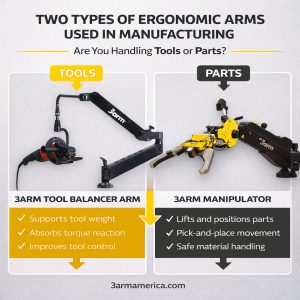
3arm refers to a category of industrial ergonomic arms designed to reduce operator strain while improving control during manufacturing tasks. The 3arm system includes two primary types of articulated arms:
3arm Tool Balancer Arms
These arms support handheld tools such as grinders, sanders, drills, and nutrunners. They counterbalance the weight of the tool and absorb torque reaction, allowing operators to guide the tool with minimal effort while maintaining precise control. Tool balancer arms are often described as zero-gravity arms, torque reaction arms, or tool support arms.
3arm Manipulators
3arm Manipulators are designed for lifting and positioning objects rather than supporting handheld tools. These articulated devices function as industrial manipulators or pick-and-place arms, allowing operators to safely move and orient parts or components during assembly, finishing, or material handling processes.
Together, these two systems form a broader ergonomic lift assist solution, supporting both tool handling and part handling on the manufacturing floor.
The Role of Tool Balancer Arms in Modern Manufacturing
As manufacturers increasingly focus on ergonomics, productivity, and worker safety, tool balancer arms have become an important part of modern workstations.
By supporting tool weight and stabilizing torque forces, these systems allow operators to:
-
work longer without fatigue
-
maintain better control of tools
-
improve quality and consistency
Because they reduce physical strain while improving precision, tool balancer arms are one of the most effective ergonomic lift assist solutions for supporting heavy industrial tools, while industrial manipulators handle larger lifting and positioning tasks within the same ergonomic material-handling ecosystem.
